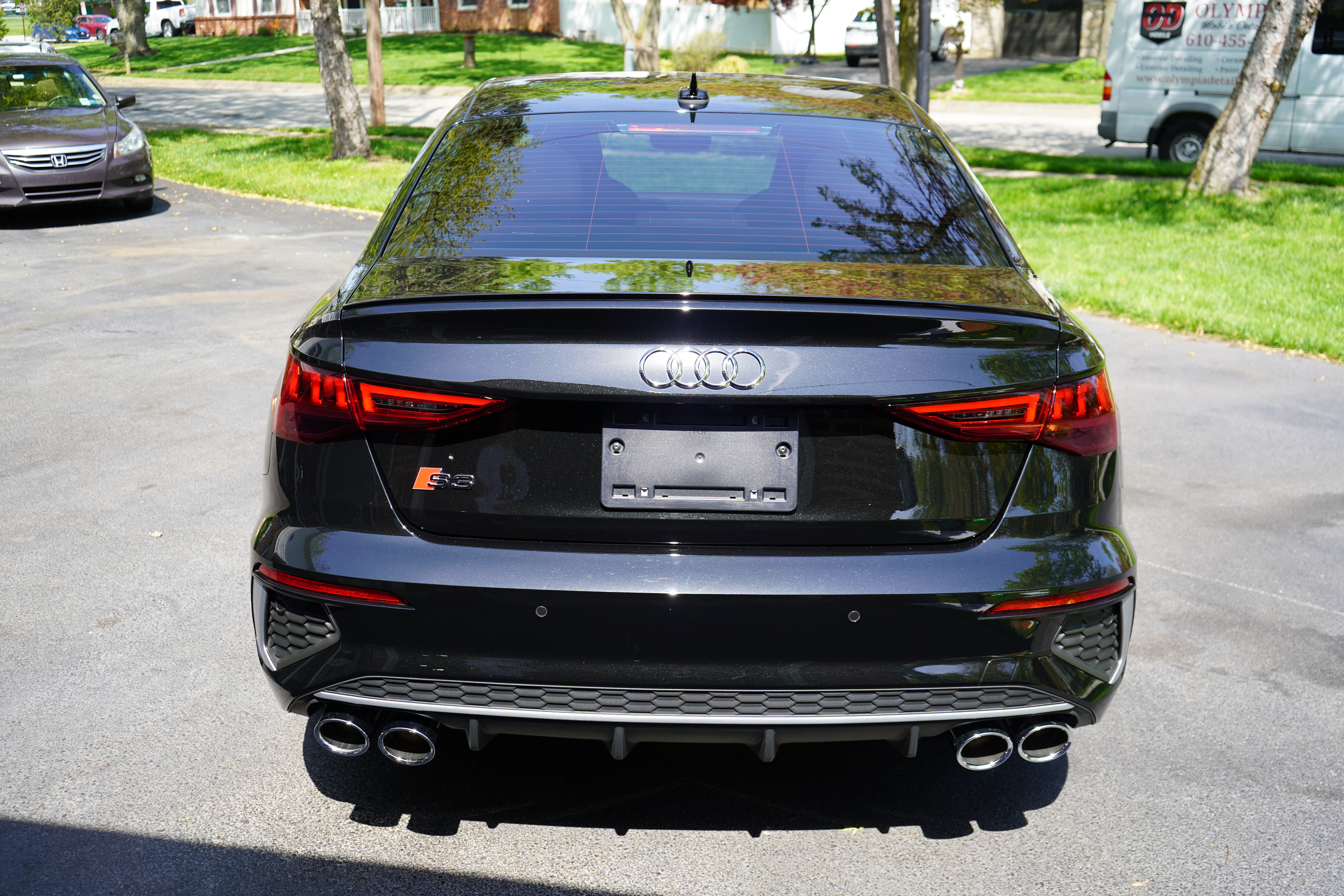
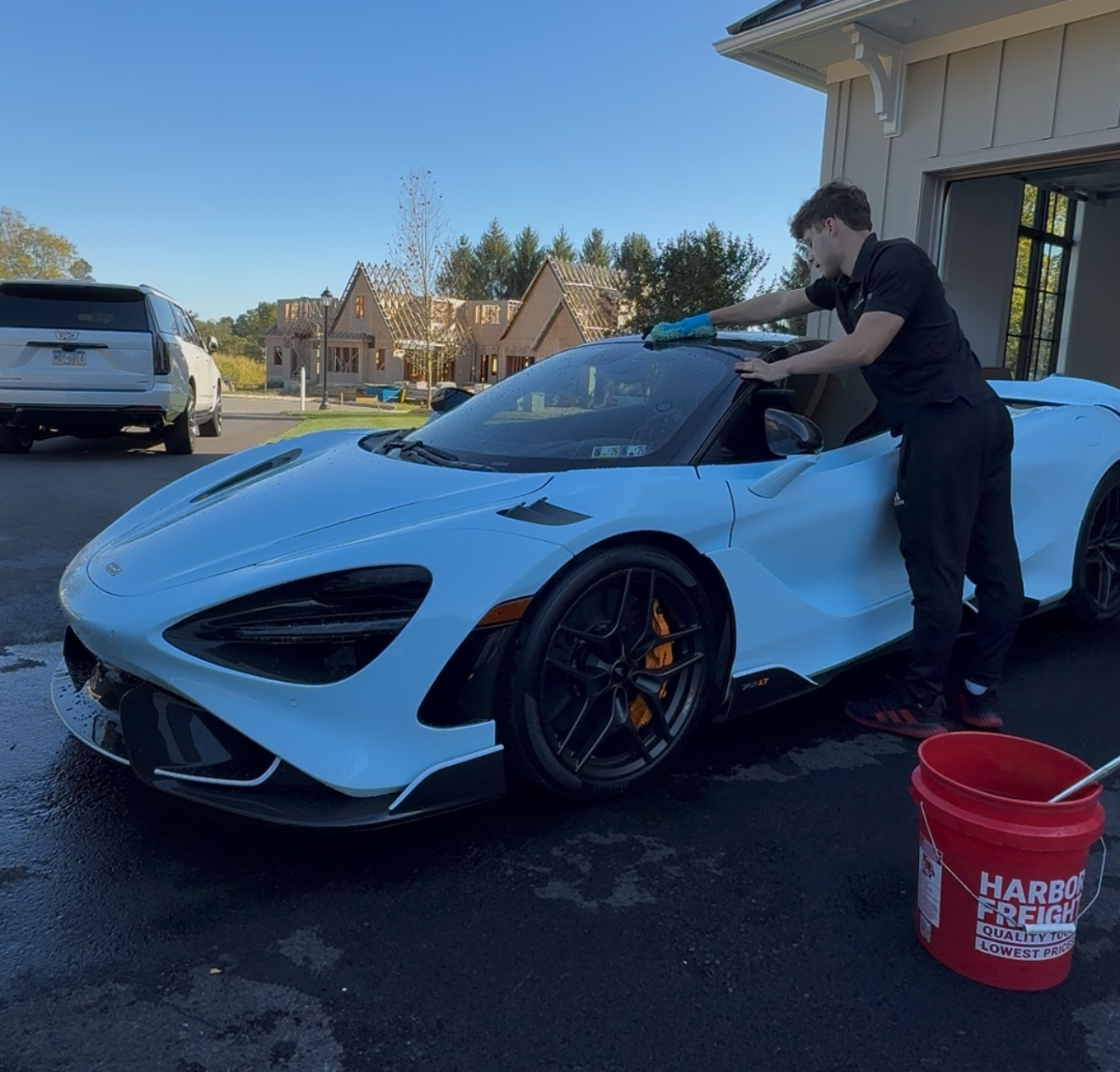
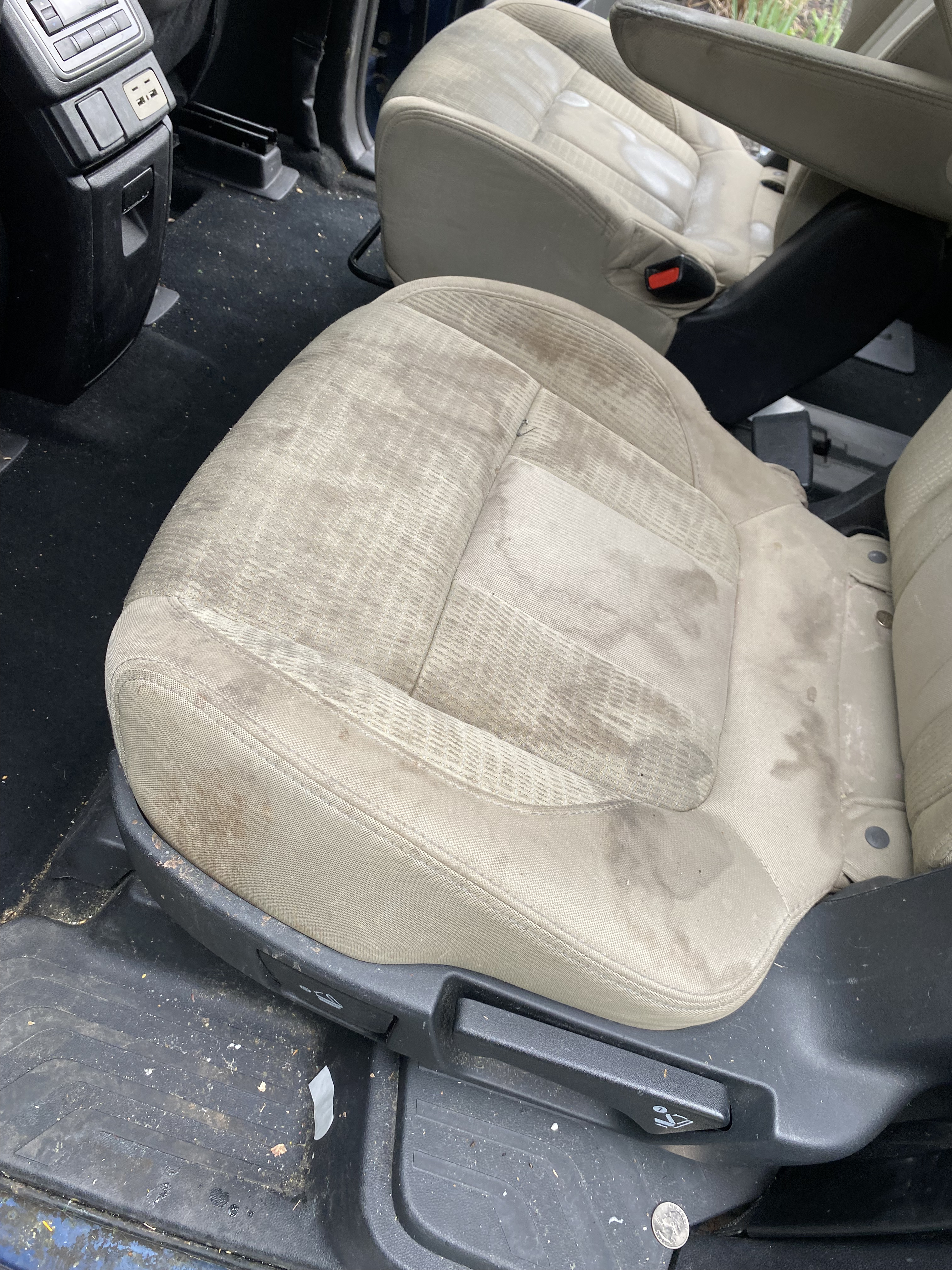

If you live on the Main Line — Wayne, King of Prussia, Villanova, Malvern, or anywhere in Chester, Delaware, or Montgomery Counties — your vehicle is fighting a losing battle every winter. PennDOT applies millions of tons of road salt and liquid brine across Pennsylvania's highway system from October through March. And most car owners have no idea what it's actually doing to their paint.
This isn't a scare tactic. It's chemistry. And understanding it is the difference between a vehicle that holds its value and one that looks like it aged ten years after five Pennsylvania winters.
What Road Salt Actually Does to Your Paint
Road salt — sodium chloride — is hygroscopic, meaning it actively attracts and holds moisture. When salt spray from the road lands on your vehicle, it doesn't just sit there. It pulls water toward itself, creating a saline solution that stays in contact with your clear coat far longer than plain water would.
That saline solution is corrosive. It doesn't eat through metal immediately — that's rust, which is a separate and slower problem. What it does immediately is attack your clear coat through a process called deicing salt etching. The salt solution has a slightly acidic pH that degrades the polymer structure of your clear coat over repeated exposure cycles.
The Specific Damage Pattern on Main Line Vehicles
After five years of detailing vehicles across Wayne, King of Prussia, Villanova, and Malvern, I see the same damage pattern on vehicles that haven't been properly protected:
Lower Panel Oxidation
The bottom 12 inches of every door, the rocker panels, and the lower bumpers take the highest concentration of road salt spray. On vehicles without paint protection, this area shows dull, chalky oxidation first — typically within 2–3 seasons on an unprotected vehicle.
Clear Coat Delamination
In more advanced cases, the clear coat begins to peel away from the base coat. Once delamination starts, it spreads. There is no DIY fix for delamination — it requires professional repainting, which costs $1,500–$4,000+ per panel at a body shop.
Rock Chip Rust Seeding
Every rock chip that reaches bare metal becomes a rust nucleation point when exposed to road salt. What starts as a pin-sized chip becomes a spreading rust spot within 1–2 winters. On a white or silver vehicle, this shows up as brown staining radiating from the chip.
Swirl Mark Acceleration
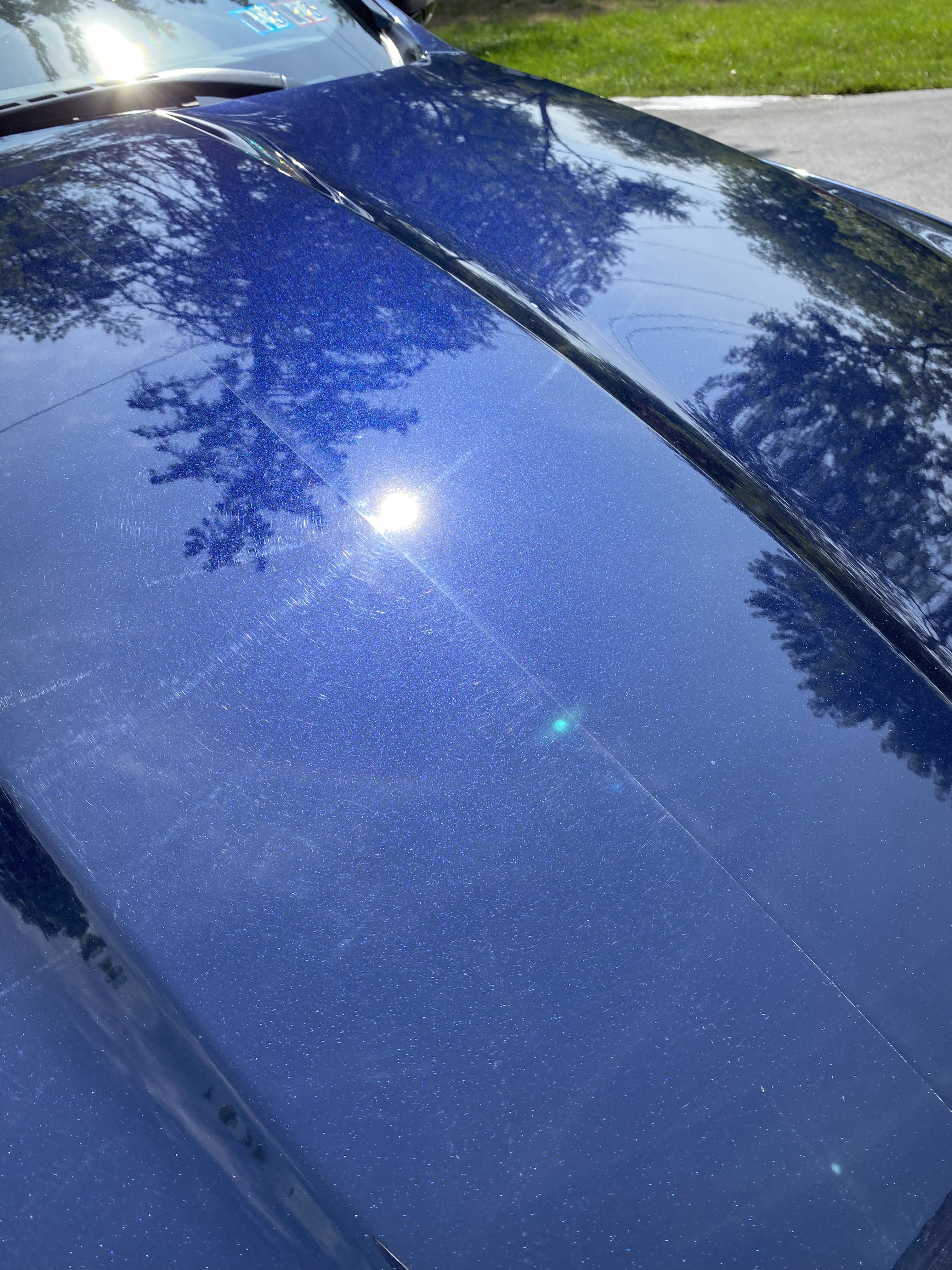
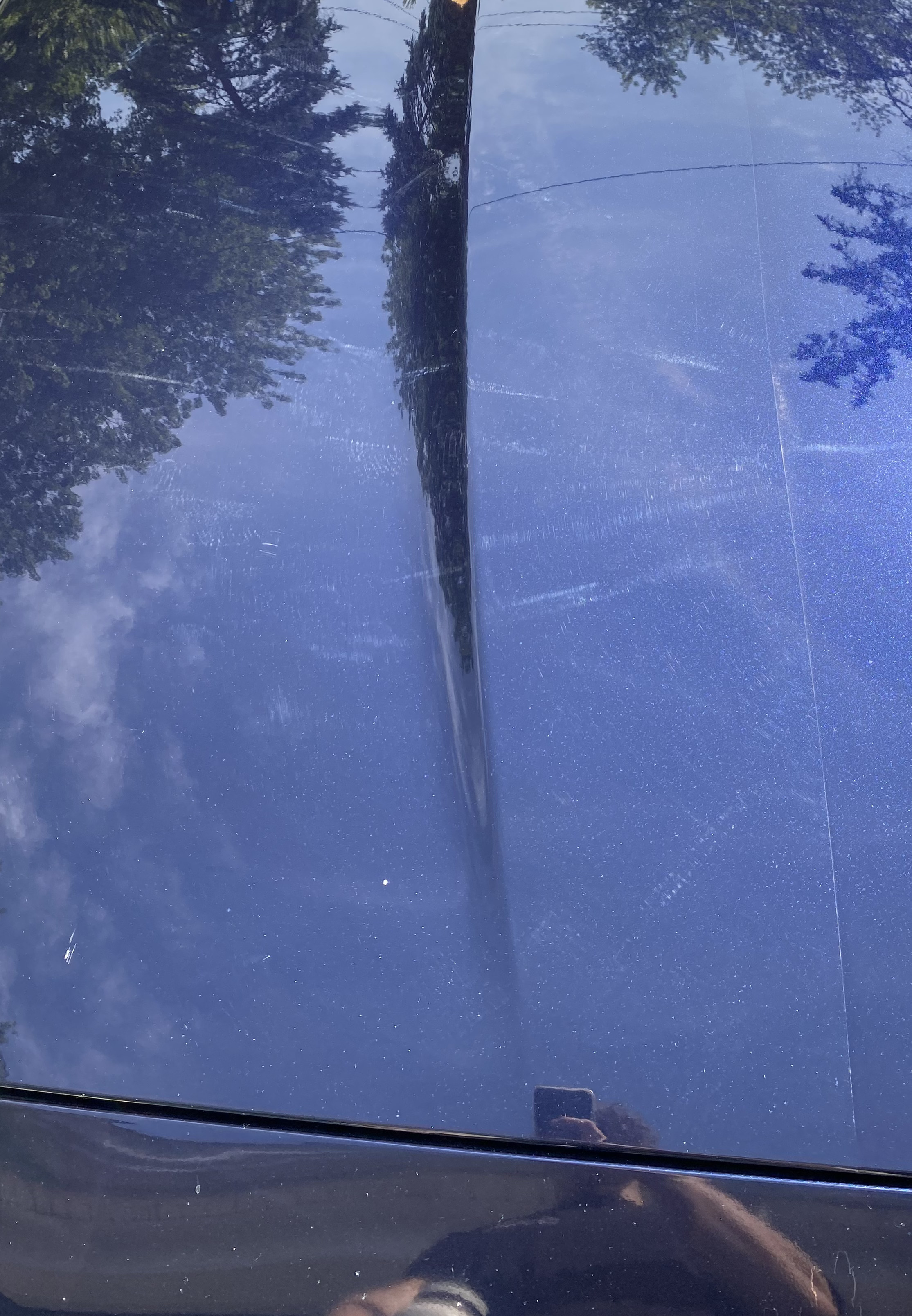
Salt crystals that dry on the surface become abrasives. When a dirty, salt-covered vehicle is wiped down — even with a microfiber — those crystals drag across the clear coat and create swirl marks. This is how most "hand-washed" vehicles on the Main Line end up with swirl-mark damage that looks like it came from an automatic car wash.
Why Regular Washing Isn't Enough
The most common misconception I hear from clients: "I wash my car regularly, so it's fine." Regular washing removes salt from the surface — but it does nothing to address what's already happening at the microscopic level.
A standard car wash, even a professional one, does not:
- Remove iron fallout — microscopic metal particles from brake dust that embed in the clear coat and accelerate corrosion
- Eliminate bonded salt contamination from previous cycles
- Repair micro-etching that has already occurred
- Provide any ongoing chemical resistance between washes
Washing removes the visible salt. It does not protect the paint from the next exposure. And in Pennsylvania, the next exposure is tomorrow's commute on Route 30 or the Schuylkill Expressway.
The One Investment That Actually Stops It
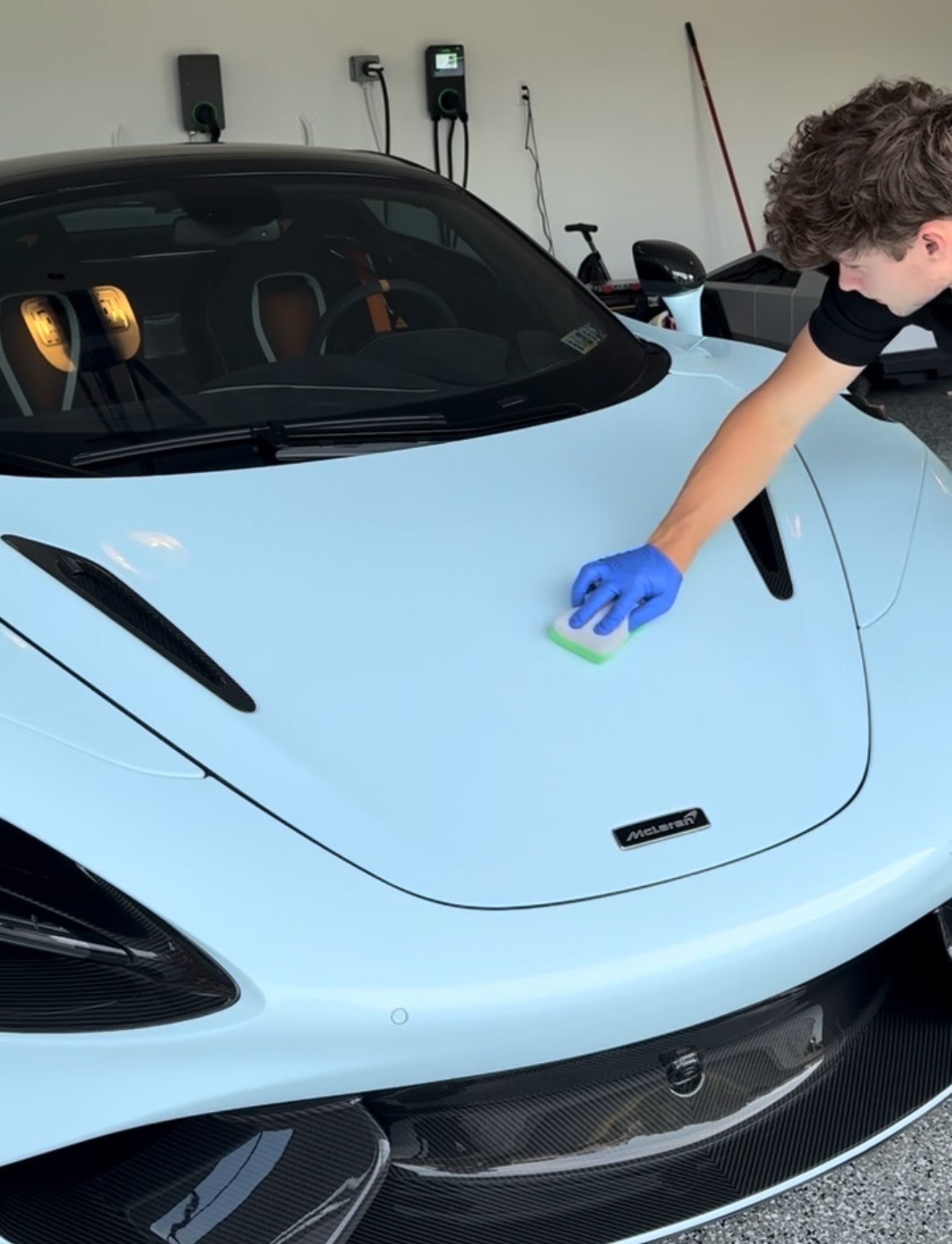
A professional ceramic coating is the only product that provides genuine chemical resistance against road salt damage between washes. Not wax. Not spray sealants. Not dealer-applied "paint protection" packages. A properly applied, cured ceramic coating.
Here's why ceramic coating works where everything else fails:
It Bonds to the Paint — It Doesn't Sit on Top
Wax and spray sealants are topical products. They sit on the surface of the clear coat and degrade through normal environmental exposure — typically 4–12 weeks in Pennsylvania winter conditions. A ceramic coating chemically bonds to the clear coat at a molecular level. It becomes part of the surface. Road salt cannot dissolve it.
The Hydrophobic Layer Physically Repels Salt
A cured ceramic coating has a contact angle of 90–110 degrees. In practical terms: salt-laden water beads immediately and rolls off the surface rather than sitting on it. The dwell time — the amount of time salt solution is in contact with your paint — drops to near zero on a coated vehicle.
9H Hardness Prevents Abrasive Damage
The 9H hardness rating of a professional ceramic coating means dried salt crystals cannot scratch through the coating to reach the clear coat underneath. The coating takes the abrasive damage. The paint stays pristine.
Post-Winter Decontamination Becomes Simple
One of the most underrated benefits of ceramic coating for Pennsylvania drivers: the spring decontamination wash. On an uncoated vehicle, removing winter's worth of bonded iron fallout, salt contamination, and road film requires a clay bar treatment and often machine polishing. On a coated vehicle, a proper maintenance wash removes the same contamination with a pH-neutral soap and a foam cannon. The coating prevents the contamination from bonding in the first place.
What Olympia Detailing Recommends for Main Line Vehicles
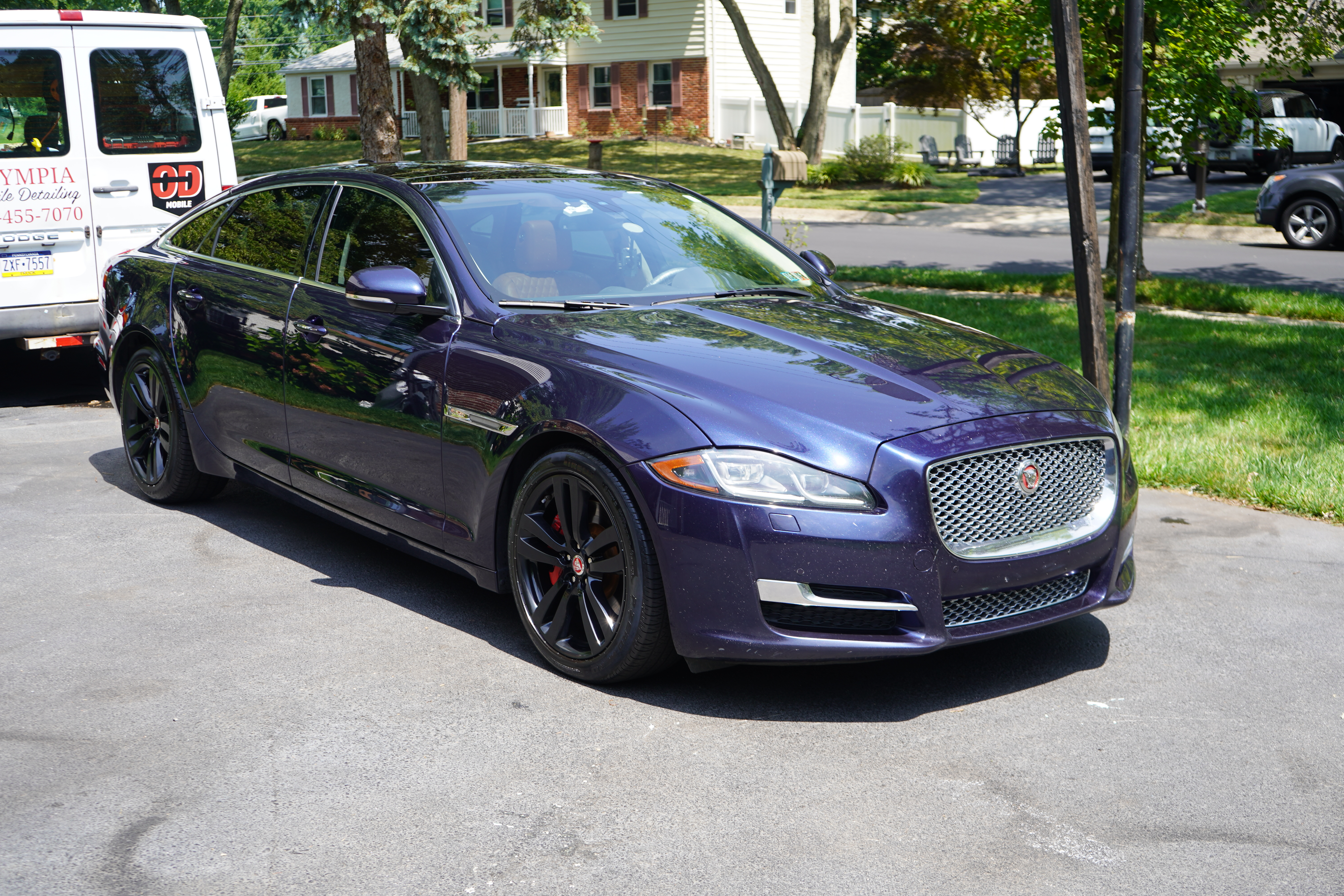
For vehicles driven year-round in Chester, Delaware, or Montgomery County, I recommend a System X ceramic coating installed before the first frost — ideally in September or October. Here's the honest breakdown by situation:
New Vehicle (Under 2 Years Old)
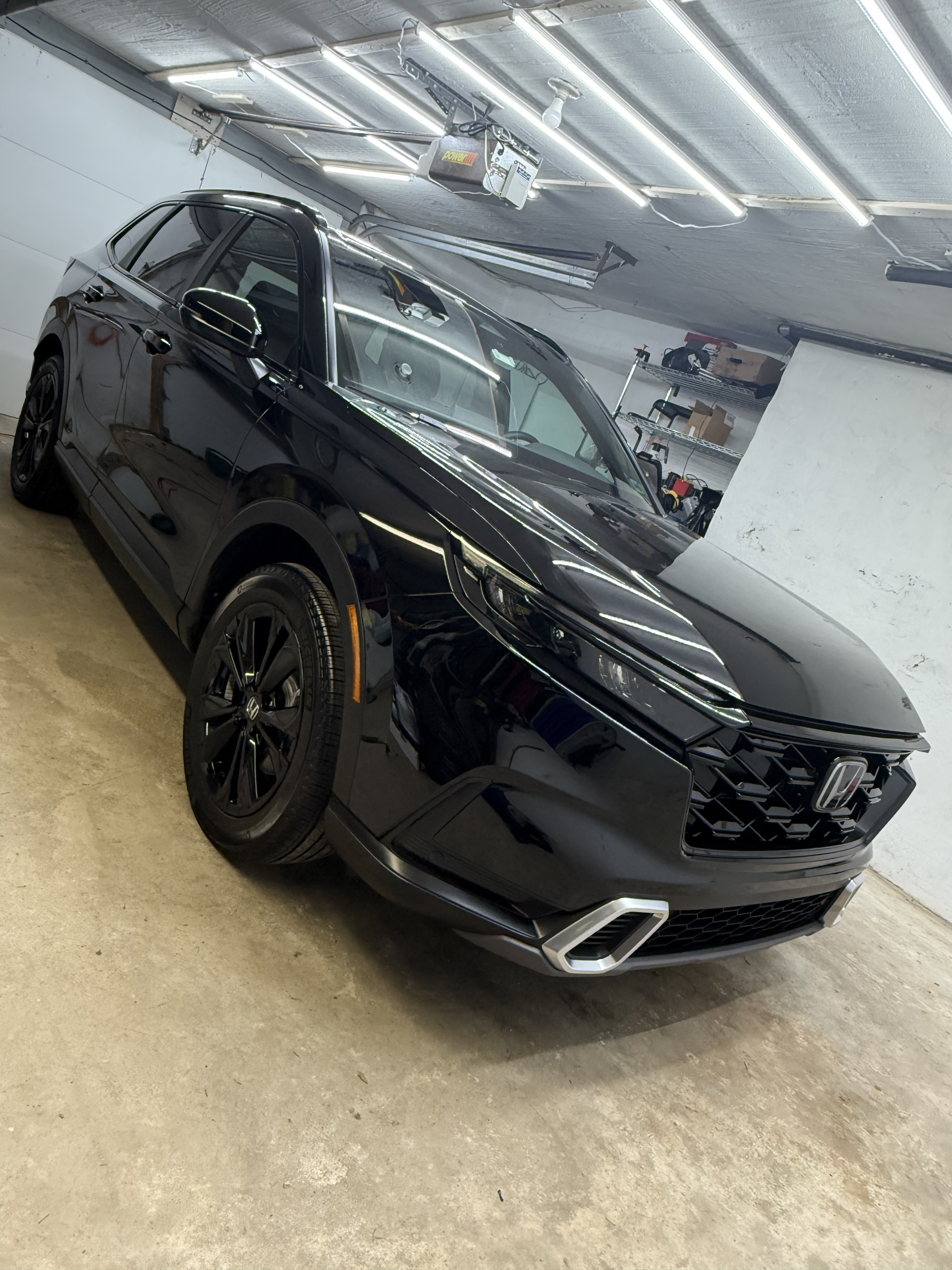
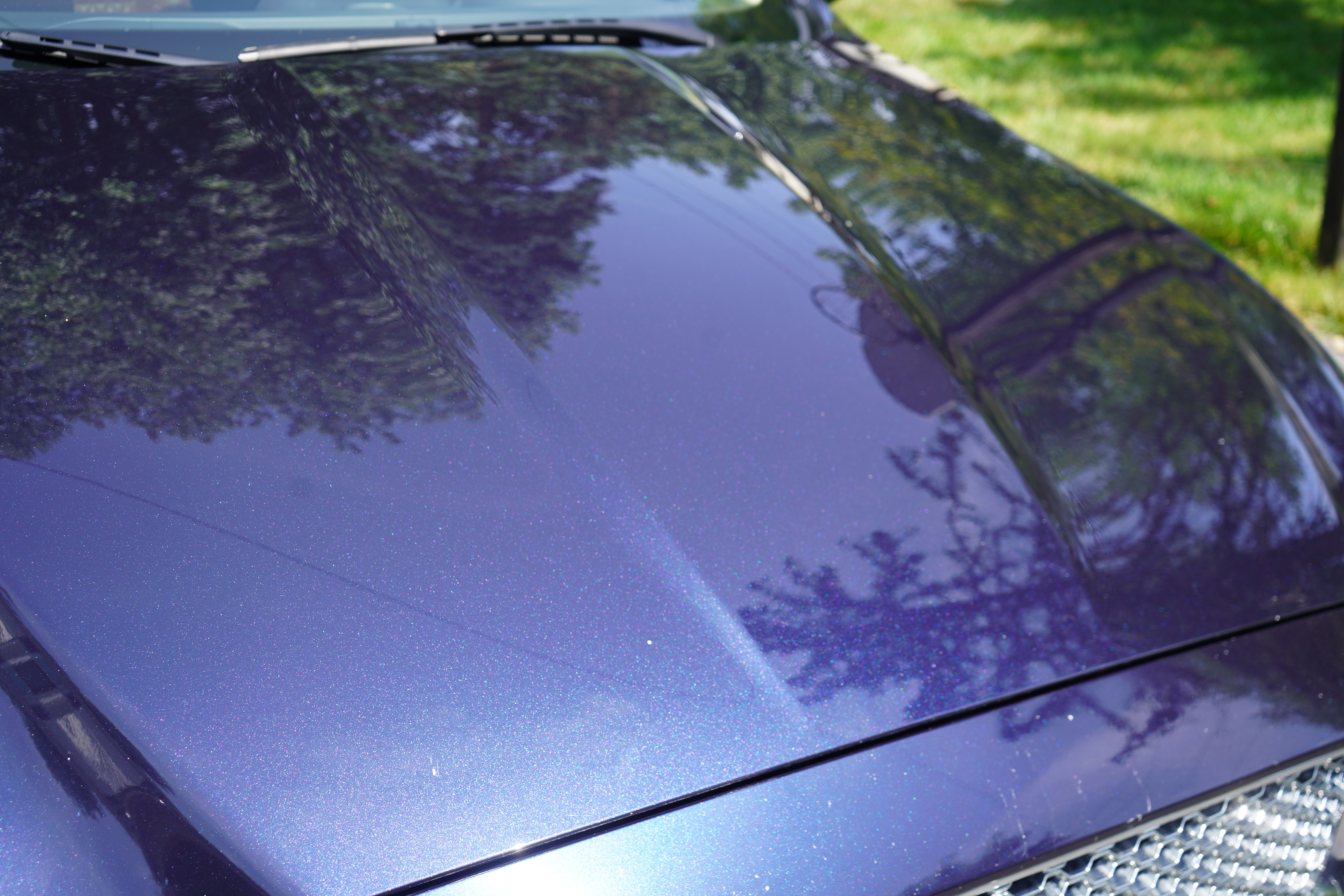
Install ceramic coating immediately. The paint is in perfect condition. A single professional polish before installation corrects any transport or dealer-prep marring, and the coating goes on perfect paint. You'll protect the investment from day one and never wax the car again.
Used Vehicle (2–5 Years, Well-Maintained)
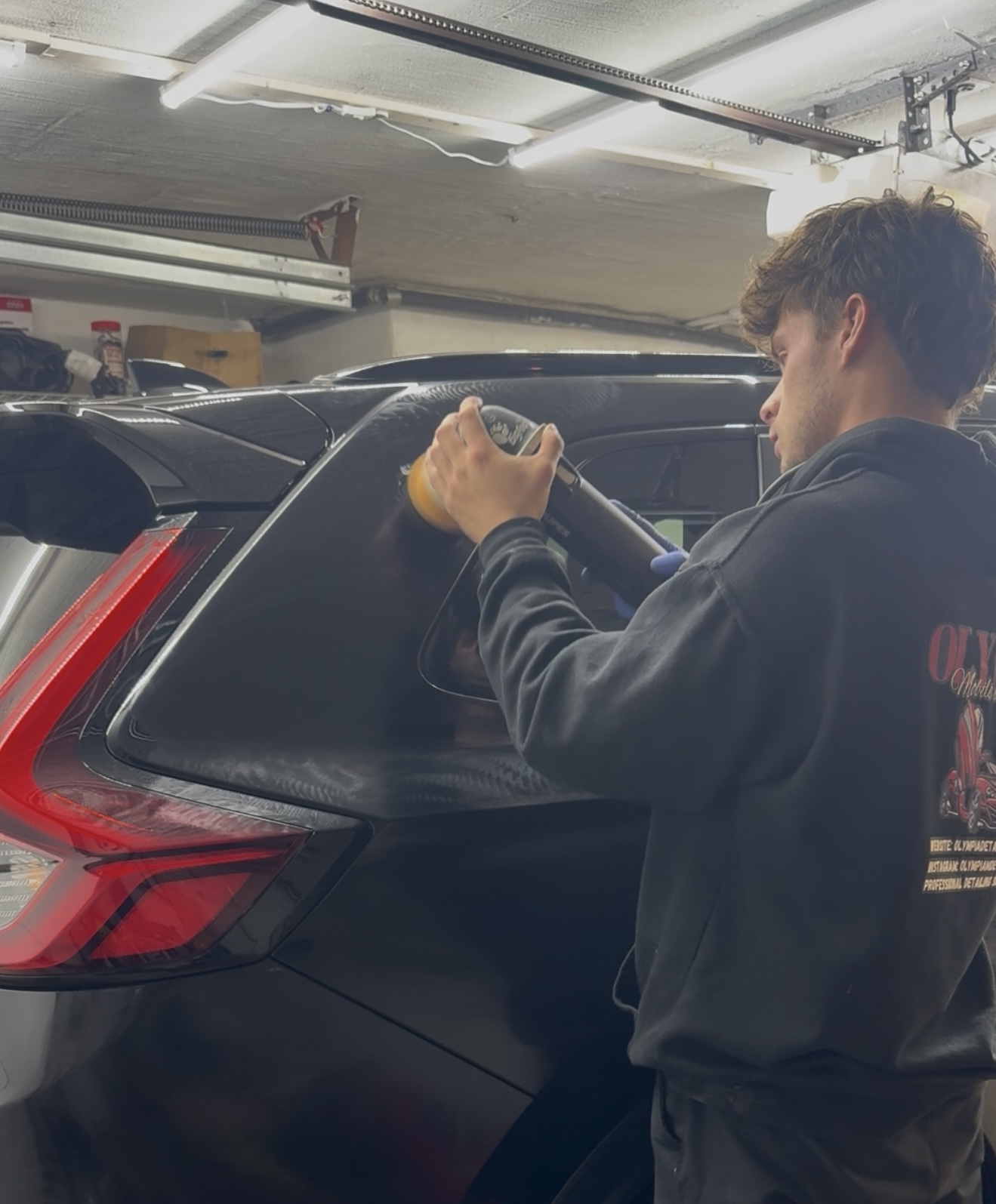
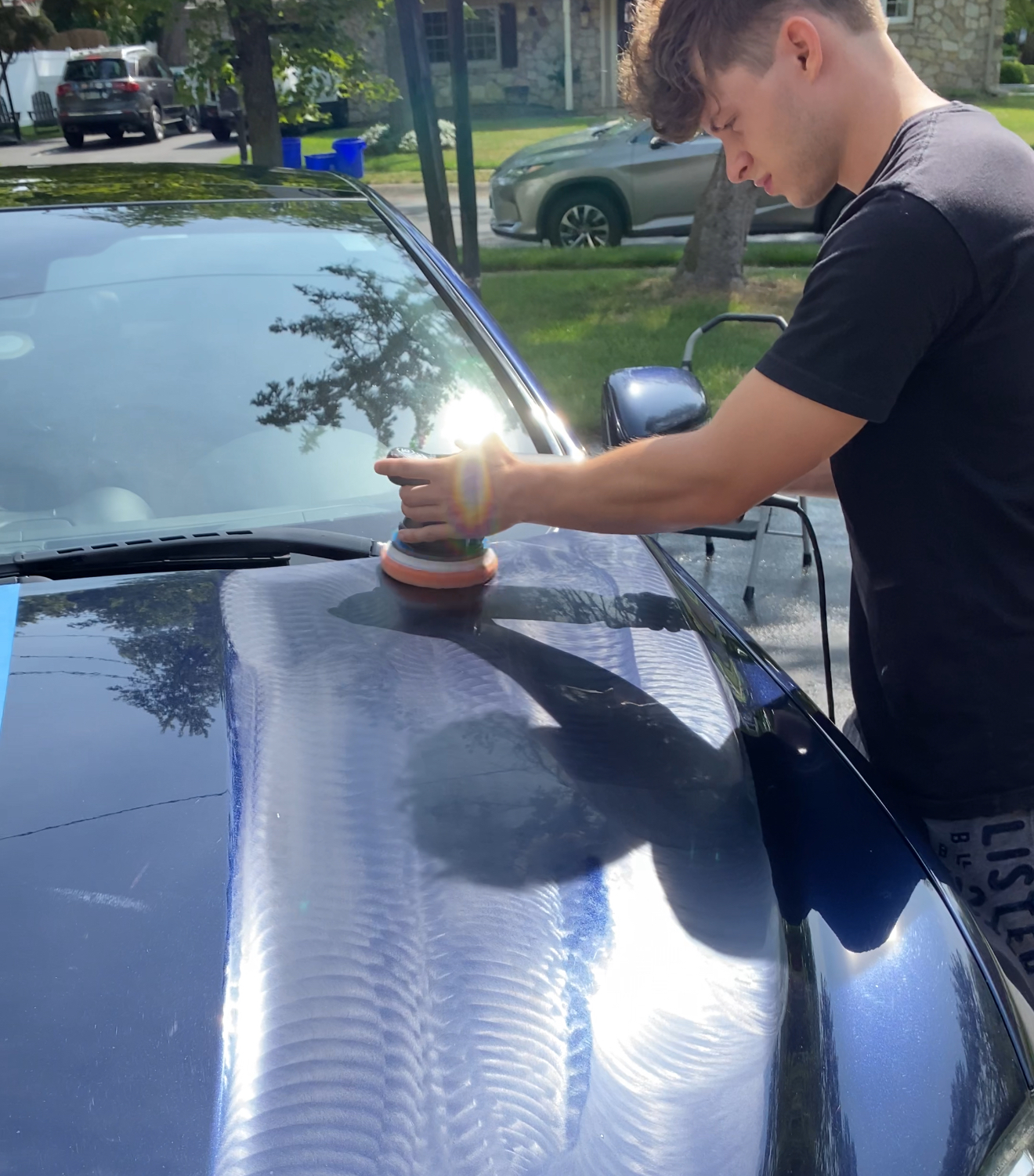
A Signature Detail or paint correction followed by ceramic coating. The correction removes any existing swirl marks and surface oxidation before sealing. This is the most common scenario for Main Line clients — a vehicle that looks fine but has accumulated a season or two of clear coat damage that needs to be corrected before coating.
Older Vehicle With Visible Salt Damage
A full paint correction is required before any coating install. Depending on severity, this may be a 2-step or 3-step correction process. The goal is to restore as much clarity as possible, then protect what remains. I'll always give you an honest assessment of what's correctable before we begin.
PROTECT YOUR PAINT BEFORE THIS WINTER
Serving Wayne, King of Prussia, Villanova, Malvern, and Greater Philadelphia. Mobile installation at your location — no drop-off required.
The Bottom Line
Pennsylvania road salt is not a minor inconvenience. It's a documented, measurable threat to automotive clear coat that causes hundreds of dollars in incremental damage every winter on unprotected vehicles. The math is straightforward: a $999–$1,999 ceramic coating installed once protects your paint for 3–10 years. A single panel repaint at a body shop costs more than the coating itself.
The clients I see who wait — who plan to "get around to it" after one more winter — consistently come back the following spring with more damage than we can fully correct. The best time to coat a vehicle is before the first Pennsylvania winter. The second-best time is now.
If you're in Wayne, King of Prussia, Villanova, or anywhere on the Main Line and you're ready to stop letting winter destroy your paint, call or text me directly at (610) 608-9501. I'll assess your paint and recommend the right approach — no upsell, no pressure.